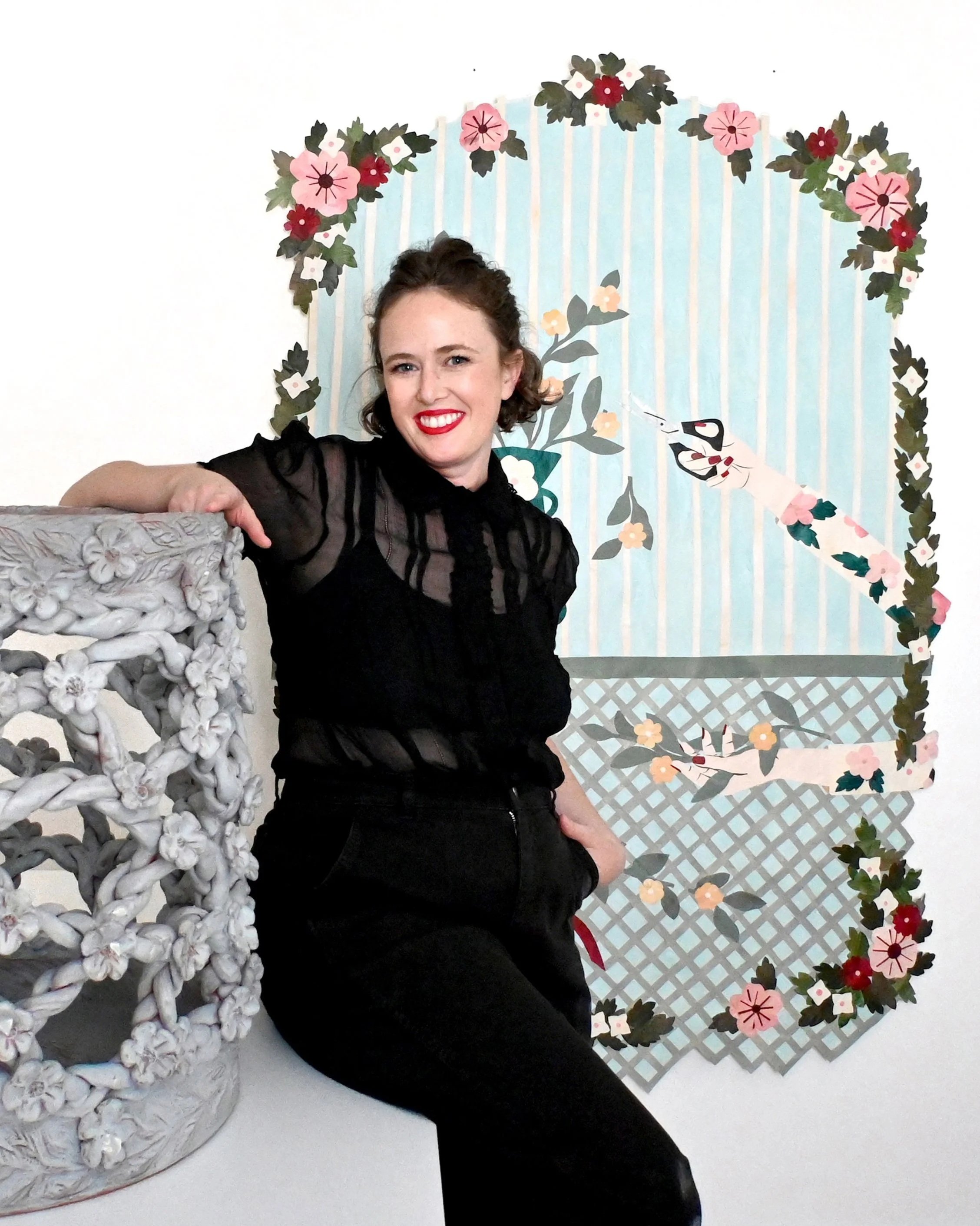
Maura Wright is a visual artist working primarily in earthenware clay and painted paper. She explores the vessel as a sculptural subject. Bold and colorful patterns are paired with a reverence for romantic, classical forms. Her ceramic vessels are often displayed in constructed environments comprised of paintings done on paper or painted directly on the wall.
In 2026, Wright was invited to be the Martin Shallenberger Artist-in-Residence at Cheekwood Estate & Gardens where she opened her first solo museum show in Nashville, TN. Additional residencies include Guldagergaard in Skaelskor, Denmark, the International Ceramics Studio in Kecskemet, Hungary, and the Archie Bray Foundation in Helena, MT. Her work has been exhibited at Design Miami, Collectible, FOG Art & Design and featured in several design publications, including Architectural Digest, Surface, Curbed, and Dwell.
Wright earned an MFA from the New York State College of Ceramics at Alfred University in 2018 and a BFA from the Kansas City Art Institute in 2013. After six and a half years living in Montana, she returned to Kansas City, MO in 2024 where she now lives with her artist-partner, their three cats, and one dog.
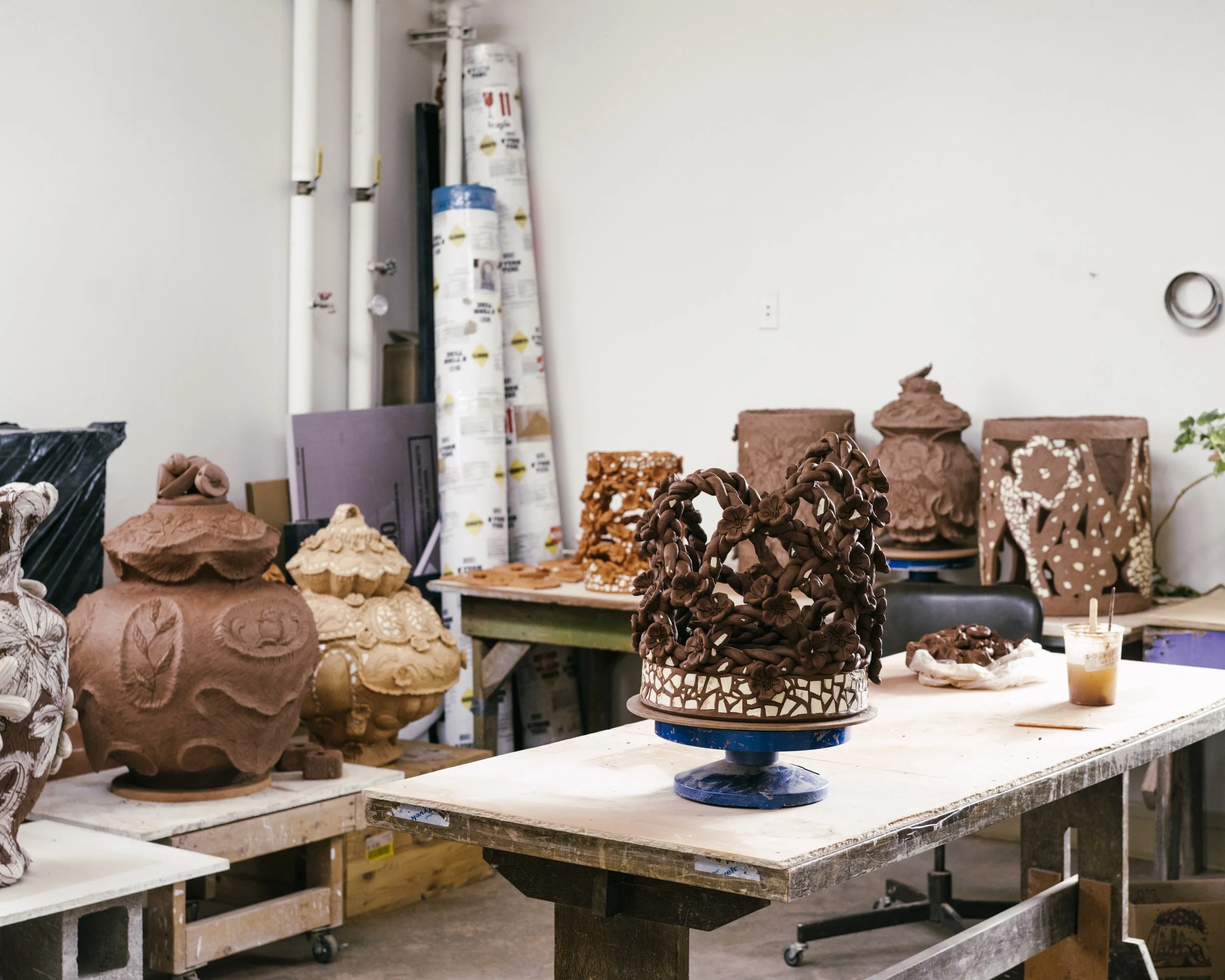


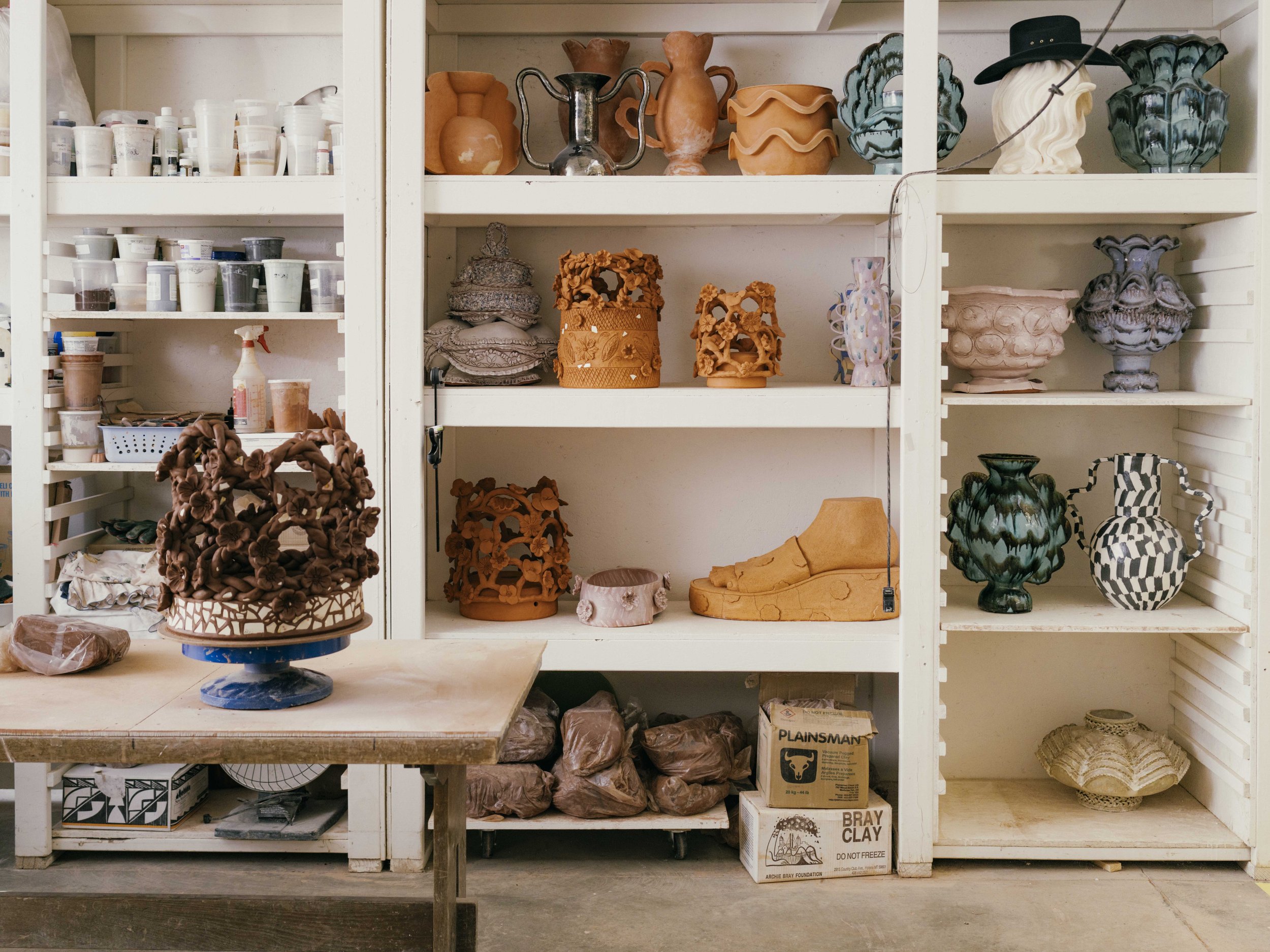
Studio Images by Will Warasila